
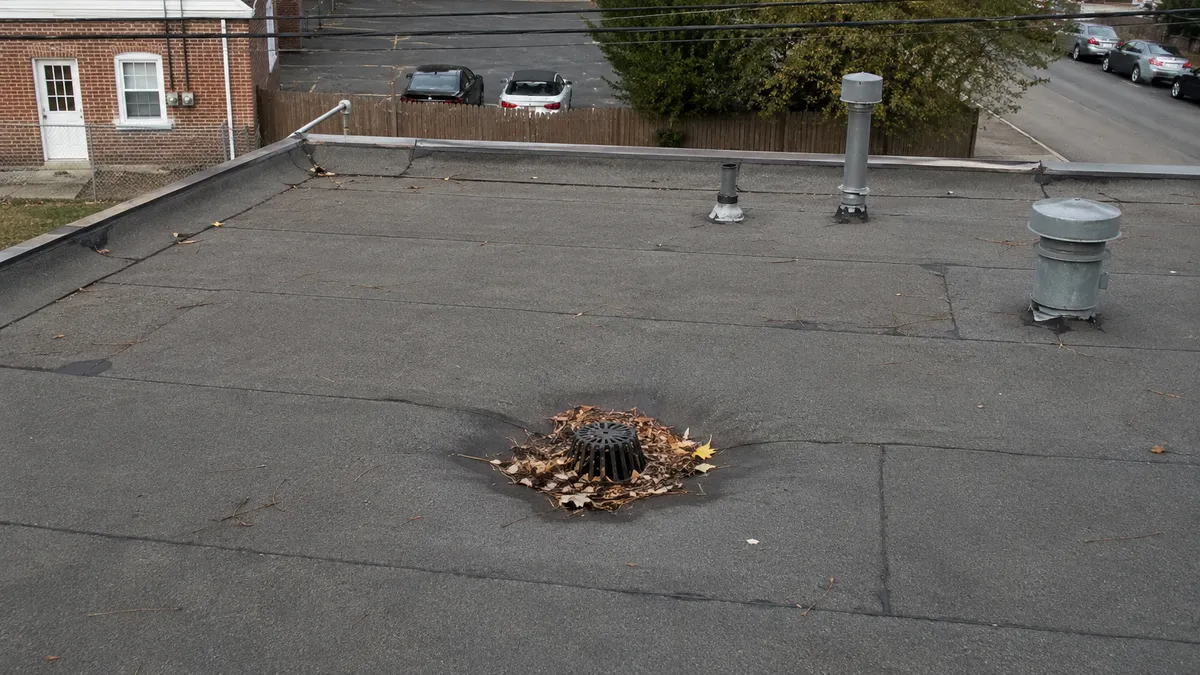
A flat roof usually does not fail because one dramatic thing happens overnight. More often, a drain slowly plugs with leaves, water starts sitting in the same low spot, a membrane seam begins to separate, or someone servicing rooftop equipment accidentally damages the roof and nobody notices until water appears inside months later.
That makes maintenance especially important on flat and low-slope roofs. Unlike a steep shingle roof, where gravity moves water quickly toward the gutters, a low-slope system depends heavily on properly functioning drains, membrane seams, flashing, and penetrations. The National Roofing Contractors Association identifies maintenance as one of the most important factors, after proper installation, in determining how long a roof system performs. In Milwaukee, snow, ice, freeze-thaw cycles, summer storms, and falling debris give you even more reason to catch small problems early.
The 7 Most Important Flat Roof Maintenance Tasks
1. Keep Roof Drains and Scuppers Clear
Drainage is one of the first things to check on any low-slope roof.
Leaves, twigs, roofing debris, dirt, and other material can collect around drains and prevent water from leaving the roof normally. On commercial buildings, debris can also accumulate behind rooftop equipment or in areas where wind naturally deposits it.
Watch for:
- Leaves piled around drains
- Standing water after rain
- Water collecting along parapet walls
- Debris blocking scuppers
- Vegetation or organic growth in persistently wet areas
- Water marks showing that a low spot repeatedly fills
A “flat” roof should not function like a shallow swimming pool.
The National Roofing Contractors Association recommends positive drainage because persistent ponding can be detrimental to roof systems. Wisconsin’s commercial building requirements also specifically address primary and secondary roof drainage, reflecting how important controlled drainage is on low-slope buildings.
If the same area holds water repeatedly even when the drains are clear, the problem may be more than maintenance. The roof could have a low area, drainage problem, insulation issue, or structural condition that needs professional evaluation.
2. Look for Membrane Damage
Most flat roofs do not use ordinary asphalt shingles.
Depending on the building, you may have a single-ply membrane such as EPDM or TPO, a modified bitumen system, built-up roofing, metal, or another low-slope roofing system. The National Roofing Contractors Association maintains separate inspection and repair guidance for these systems because they behave differently from steep-slope shingle roofs.
Regardless of material, you are looking for changes in the roof surface.
Cuts and punctures. Tools, dropped equipment, sharp debris, or foot traffic can damage a membrane.
Open seams. Areas where sections of membrane join together deserve attention if they begin separating.
Blisters or bubbles. Raised areas can indicate a problem within the roofing assembly.
Loose material. Sections that no longer appear securely attached should be inspected.
Visible deterioration. Cracking, splitting, or other changes in the membrane should not simply be ignored because the roof has not started leaking yet.
A small membrane repair is much easier to deal with before water reaches insulation and decking underneath it.
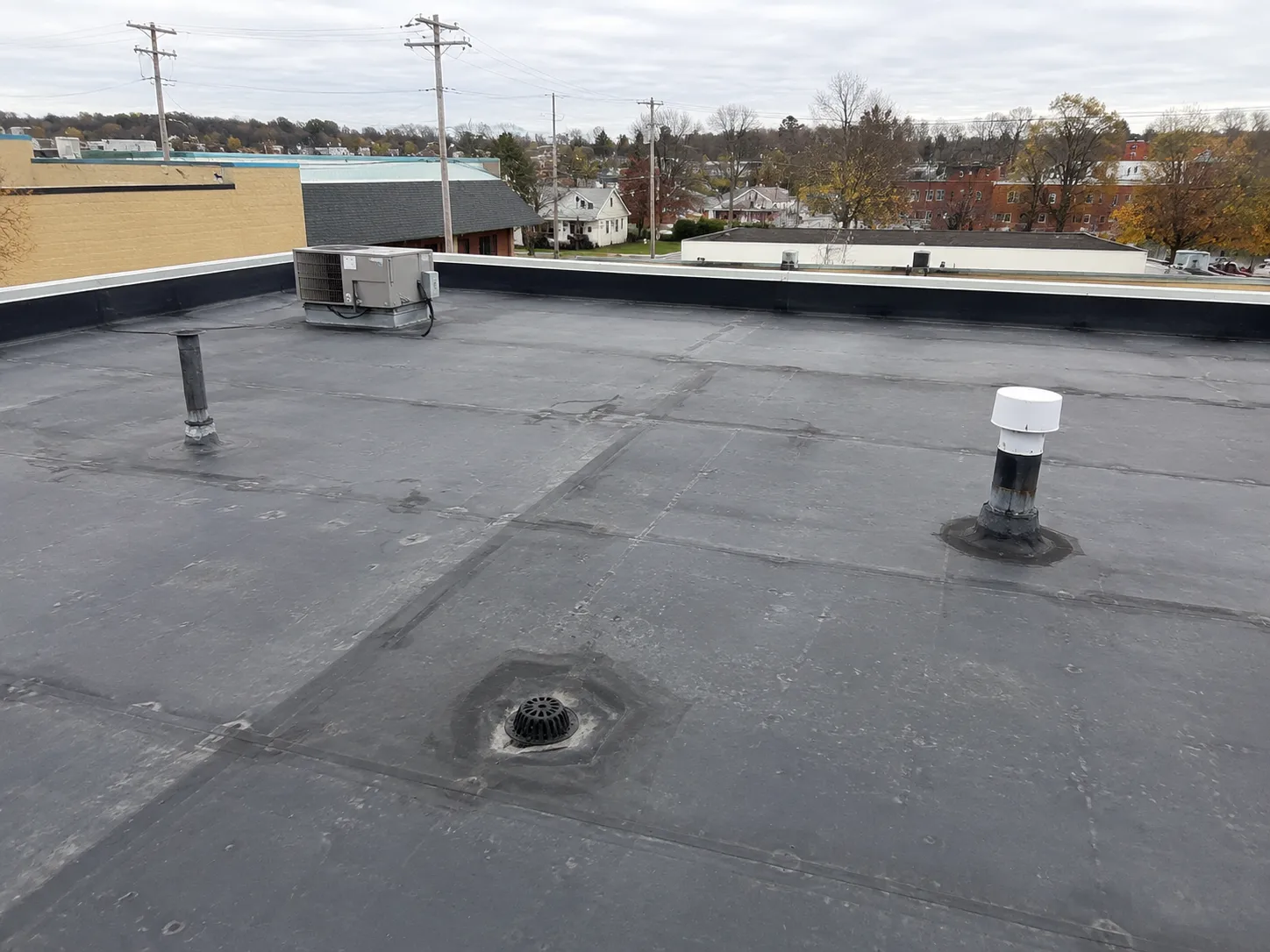 Checking drains, seams, and flashing regularly catches small problems before they reach the interior.
3. Check Flashing and Roof Edges
Flat-roof leaks often begin at transitions rather than in the middle of an uninterrupted roof surface.
Pay particular attention to areas where the roof meets:
- Parapet walls
- Chimneys
- Skylights
- Curbs
- Vents
- HVAC equipment
- Pipes
- Other roof sections
Flashing has to keep water out while different materials expand, contract, and move independently.
Wisconsin’s commercial building code requires flashing at roof and wall intersections, changes in roof direction, gutters, and roof openings for exactly this reason.
Look for flashing that appears loose, separated, bent, cracked, or pulled away from the adjoining surface.
Do not assume that because the membrane itself looks good, the entire roof is watertight.
A perfectly intact field of roofing material can still leak through one failed penetration or flashing detail.
4. Inspect After Anyone Works on the Roof
This is particularly important for businesses.
Your roofer may not be the person most frequently walking on your roof.
HVAC technicians, electricians, sign contractors, satellite installers, plumbers, maintenance crews, and other trades may need access to rooftop equipment.
Every visit creates another opportunity for tools to be dropped, membrane to be punctured, access panels to be dragged, or materials to be left behind.
After rooftop work, check the area around the work zone.
Look for punctures. Even a small cut can create a water-entry point.
Check seams and flashing. Equipment servicing sometimes requires working close to roof penetrations and curbs.
Remove leftover materials. Screws, metal scraps, packaging, and other debris should not remain on the roof.
Document the condition. For a commercial property, keeping a simple record of who accessed the roof and why can make future leak investigations much easier.
This is one reason scheduled roof maintenance matters even when nothing appears wrong inside the building. The National Roofing Contractors Association recommends organized inspection and maintenance programs for low-slope roof systems rather than waiting for leaks to appear.
5. Clear Leaves, Branches, and Other Debris
Milwaukee roofs see plenty of material that was never supposed to be there.
Leaves collect in the fall. Branches come down during storms. Wind carries loose debris onto commercial roofs. Tree seeds and organic material collect in corners and around drains.
Debris creates problems in several ways.
It can block drainage.
It can hold moisture against the roof.
Sharp material can damage the membrane.
It can hide small roof defects during a visual inspection.
This becomes especially important on buildings near mature trees. Milwaukee lost a large portion of its ash tree canopy to Emerald Ash Borer over the past decade, and dead or declining limbs remain a real concern around homes and commercial buildings.
If a large branch has struck the roof, do not treat removal as the end of the problem. Have the impact area inspected for membrane, flashing, or underlying damage. Our storm and hail damage repair team can assess what a fallen branch actually did to the roof system.
6. Pay Attention to Seams and Previous Repairs
A previous repair is an area you should remember.
That does not mean the repair was done incorrectly. It means you already know that part of the roof experienced a problem once.
During future inspections, look for changes around:
- Membrane patches
- Repaired seams
- Old penetrations
- Flashing repairs
- Areas where equipment was removed
- Previously documented leak locations
If the same area repeatedly needs attention, you may be dealing with an underlying drainage, movement, flashing, or installation issue rather than a series of unrelated leaks.
This is where maintenance records become valuable for a business or property manager.
Instead of saying, “We have another leak near the back office,” you can identify that the same roof section has been repaired three times after heavy rain.
That pattern can change the recommended solution.
7. Inspect the Roof Regularly and After Major Weather
Do not make the first inspection the day water enters the building.
A practical maintenance program includes routine inspections as well as additional checks after significant wind, hail, snow, or other severe weather.
The National Roofing Contractors Association specifically encourages scheduled inspection and maintenance programs for low-slope roofing systems, and its homeowner guidance commonly points to spring and fall as useful times to check roof conditions.
For Milwaukee properties, that timing makes sense.
Spring inspection. Look for anything winter left behind, including drainage problems, membrane damage, flashing movement, or storm debris.
Fall inspection. Clear leaves and debris before snow and freezing temperatures arrive.
Post-storm inspection. Check after major hail, high wind, or falling tree debris.
For a commercial building, it is worth treating these inspections as part of normal property maintenance rather than something you schedule only after a tenant reports water on the floor.
One More Wisconsin Factor: Snow, Ice, and Freeze-Thaw Cycles
A flat roof in Milwaukee has a winter problem that a roof in a warm climate simply does not.
Water may arrive as snow, remain on the roof for days or weeks, partially melt during a warm afternoon, and then refreeze when temperatures fall again.
That cycle can expose existing weaknesses in seams, flashing, drains, and other roof details.
Snow Can Hide Drainage Problems
A drain that worked normally in October may become surrounded by snow, ice, or frozen debris in January.
As snow begins melting, the roof still needs a clear path for water to leave.
If drainage is obstructed, meltwater can collect on portions of the roof rather than moving away normally.
The Insurance Institute for Business & Home Safety recommends addressing clogged drainage, ponding water, unusual snow drifting, and excessive snow or ice accumulation during severe winter conditions.
Do Not Attack the Roof With a Shovel
If snow accumulation becomes concerning, removing it is not as simple as climbing onto the roof with a metal shovel.
You can damage membranes and flashing while trying to solve the snow problem. There is also the obvious fall hazard, along with the possibility that heavy snow or drifting has already placed unusual loads on part of the structure.
The National Roofing Contractors Association specifically cautions against using sharp-edged tools for snow and ice removal because they can damage roof coverings and flashing.
If snow removal is actually needed, use professionals who understand the roof system underneath it.
Freeze-Thaw Can Reveal Small Defects
Water that enters a small opening and then freezes can make an existing defect more troublesome.
The solution is not trying to eliminate Wisconsin winter weather. It is entering winter with the membrane, flashing, seams, and drainage system in good condition.
That is why fall inspection matters.
Residential Flat Roofs Need Maintenance Too
Flat roofing is often associated with commercial buildings, warehouses, and storefronts, but Milwaukee-area homes can have low-slope sections as well.
You may have one over:
- A rear addition
- An enclosed porch
- An attached garage
- A sunroom
- A modern addition
- Part of a mid-century or contemporary home
These smaller roof sections can be easy to forget because the rest of the house may have ordinary asphalt shingles.
If you have a shingle roof in front and a membrane roof over the addition in back, they are two different roofing systems with different maintenance needs.
Do not assume the contractor who installed or repairs asphalt shingles necessarily handles every type of low-slope membrane.
When you schedule roof repair, tell the contractor which part of the roof is leaking and what roofing material is installed if you know.
When Maintenance Turns Into a Repair
Maintenance is intended to catch problems.
It is not a substitute for fixing them.
Call for a roof repair when you find:
- An open or separating seam
- A punctured membrane
- Damaged flashing
- Recurring ponding in the same area
- A roof drain that remains problematic after cleaning
- Water entering the building
- Loose roofing material
- Damage from hail, wind, or falling debris
- A previous repair that has opened again
One small repair does not automatically mean the roof needs replacement.
Low-slope roof systems are designed to be maintained and repaired. NRCA specifically publishes repair guidance covering common low-slope systems including built-up roofing, polymer-modified bitumen, EPDM, and TPO.
The bigger concern is a pattern.
If leaks keep appearing across unrelated sections, moisture has spread beneath the membrane, drainage problems are widespread, or repairs have become constant, it may be time to compare the cost of continued repair with a larger roofing project.
When a Flat Roof Leak Is an Emergency
A small membrane defect discovered during an inspection can usually be scheduled for repair.
Other conditions deserve immediate attention.
Call Immediately When:
- Water is actively entering the home or business
- A large portion of membrane has lifted or torn
- A tree or large branch has damaged the roof
- A roof opening is exposed to incoming rain
- Water is entering around electrical equipment
- The ceiling below the roof is sagging
- Storm damage has made the roof visibly unsafe
Temporary protection may be necessary before a permanent repair can be performed. That’s exactly what emergency roof repair is for.
For a business, reacting quickly is particularly important because a roof leak may affect inventory, electronics, offices, tenants, customer areas, or equipment underneath the leak.
Move property out of the affected area when it is safe, photograph the damage, and keep records of emergency work if an insurance claim may be involved.
The Cheapest Flat Roof Problem Is the One You Find During an Inspection
Flat roof maintenance is mostly about catching boring problems early.
A few leaves around a drain.
A seam beginning to separate.
A puncture next to an HVAC unit.
Loose flashing around a wall.
A low area where water repeatedly collects.
None of those problems feels as urgent as water dripping through a ceiling.
That is exactly the point.
Once the leak reaches the interior, you may be dealing with wet insulation, damaged decking, stained ceilings, drywall repairs, damaged inventory, or interrupted business operations in addition to the roofing problem that started it.
A flat roof does not need constant attention. It needs consistent attention.
Keep drainage paths clear. Inspect the membrane and flashing. Check the roof after storms and after contractors work around rooftop equipment. Pay extra attention before and after Milwaukee winter.
That maintenance gives you the best chance of repairing a small roofing problem while it is still just a roofing problem.
Milwaukee Roof Contractors provides roof inspection, roof repair, emergency roof repair, roof replacement, and storm and hail damage repair for homes and businesses throughout Milwaukee, Waukesha, and Ozaukee Counties, including Wauwatosa, West Allis, Mequon, Whitefish Bay, Glendale, Shorewood, Menomonee Falls, Cedarburg, Grafton, Brookfield, New Berlin, and surrounding communities. If your flat or low-slope roof has standing water, damaged membrane, failing flashing, or an active leak, contact us to have the roof evaluated before a small problem spreads.