
Roof Repair in Milwaukee Metro
Milwaukee's freeze-thaw winters and older housing stock mean roof damage rarely looks the same twice, from wind-lifted shingles after a spring storm to ice dam backups every January. We diagnose the actual cause before quoting a repair, not just patch what's visible.
📞 (414) 555-0100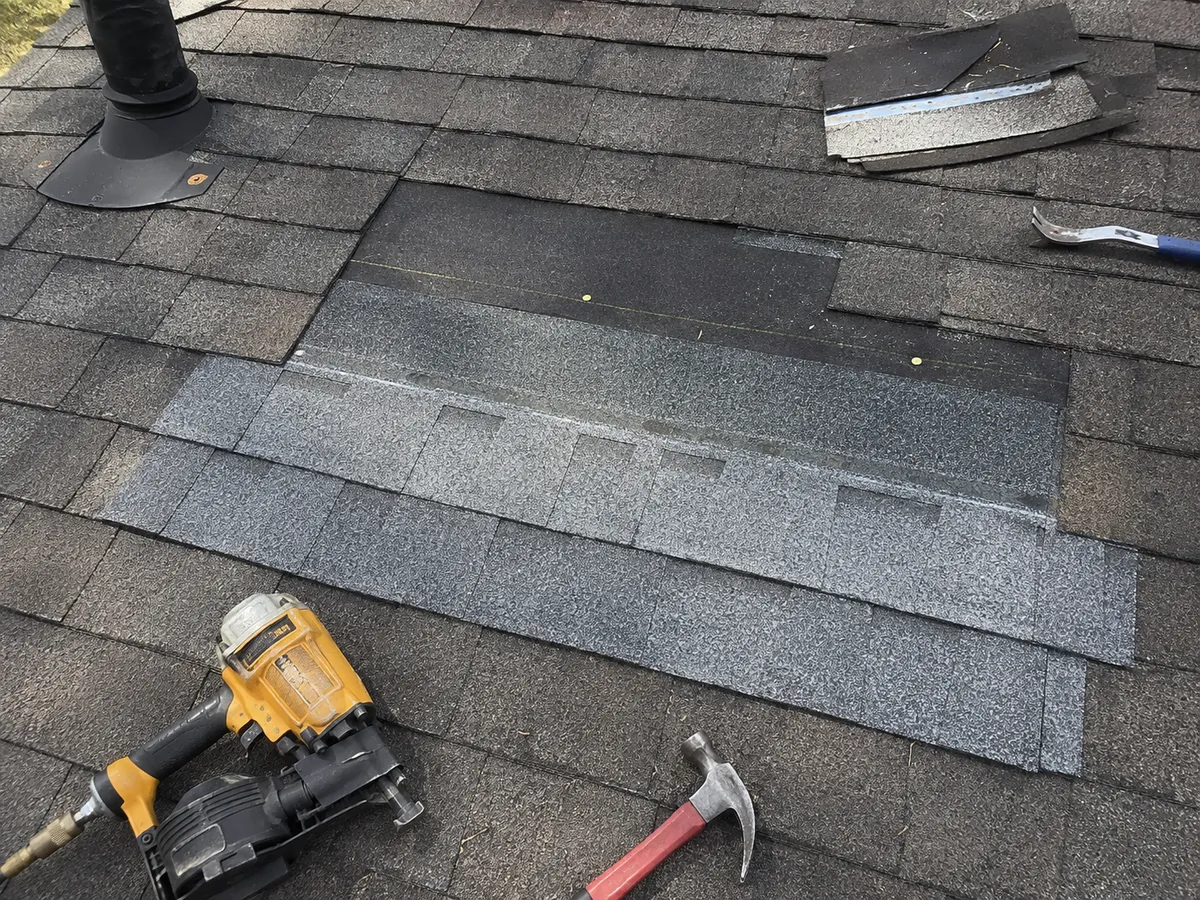
Common Roof Repair Issues We Fix
Most roof repair calls generally fall into four categories. Some are the result of years of gradual wear. Others start suddenly after a storm. Winter ice dam backups create another set of problems, while failed flashing can allow water into the roof even when the surrounding shingles still look intact.
What Does Normal Roof Wear Look Like?
Not every roof problem starts with a storm. Simple age and wear can show up as granule loss, curling or brittle shingles, and general breakdown from years of Wisconsin's freeze-thaw cycling and UV exposure.
Those signs may look minor from the ground, but the visible shingle condition is only part of what needs to be evaluated. We inspect the whole roof system to determine whether the issue is isolated enough for a repair and what is actually causing the deterioration.
What Roof Damage Can a Storm Cause?
Storm damage can include the following. The important part is separating actual storm damage from wear that was already developing, since a roof can have both at the same time. That's why we look beyond the most obvious damaged area instead of assuming every problem came from a single storm event.
- Wind-lifted shingles
- Torn-off shingles
- Hail impact
- Debris from falling branches
How Does Ice Dam Backup Affect a Roof?
Ice dam backup damage tends to develop along the eaves each winter. Water that cannot drain normally can back up under the shingles rather than continuing off the roof.
The visible water damage inside the home may be the end result, but it doesn't tell you why the backup occurred in the first place. That requires looking at the roof and the attic conditions together, which we cover in more detail below.
Why Does Flashing Cause Roof Leaks?
Flashing failures around chimneys, vent stacks, and skylights are the single most common source of a leak that shows up as a ceiling stain nowhere near the actual hole.
Water doesn't always travel straight down from where it enters the roof. A leak's entry point and its visible damage are often several feet apart, which is why we inspect the whole roof system rather than assuming the stain is directly below the problem.
Ice Dams: Milwaukee's Most Common Winter Roof Damage
Ice dams form when heat escaping unevenly from the attic melts snow on the upper roof, which then refreezes at the colder eave overhang and backs water up under the shingles. The fix usually isn't the shingles themselves.
Most of the ice dam calls we run trace back to the attic not getting enough fresh air moving from the soffit up to the ridge. The state requires balanced intake and exhaust venting for that roof and attic system (SPS 322.39), along with a minimum insulation level for our climate zone (R-49).
There's also a required protective membrane along the roof edge for the same reason, and we always check that it's actually there and intact before diagnosing anything else.
What Actually Fixes an Ice Dam Problem?
A real ice dam repair addresses the conditions causing the problem, not just the water stain left behind. The inspection needs to look beyond the damaged ceiling or the section of shingles where water appeared, checking the pieces of the system already tied to the problem:
- Intake ventilation at the soffit
- Exhaust ventilation toward the ridge
- Attic insulation
- The protective membrane along the roof edge
- The condition of the roof where the backup occurred
Do You Need a Permit for Roof Repair in Milwaukee?
For most straightforward roof repairs, the answer is no. Replacing damaged shingles or resealing flashing with the same materials generally doesn't require a City of Milwaukee building permit.
A full re-roof does, filed through the city's re-roofing permit process. Either way, whoever's doing the work needs to actually hold the state certification required to pull that permit (a Wisconsin Dwelling Contractor and Dwelling Contractor Qualifier certification), so it's worth confirming before anyone gets on your roof.
What Roof Repair Costs
Repair costs vary a lot by what's actually wrong, not just square footage. Typical ranges we see:
- Flashing repair around chimneys and vents runs roughly $10 to $20 per linear foot
- Asphalt shingle patch repairs average around $250
- Repairs on slate roofing, more common in Milwaukee's older east side neighborhoods, start around $500 and up given the specialized labor
We give a firm number after an in-person inspection, not a phone estimate, since the same symptom you can see, like a ceiling stain or a curled shingle, can mean a $250 fix or a $2,500 one depending on what's actually happening underneath.
Related reading: How to Spot a Roof Leak Before It Causes Real Damage
Schedule Roof Repair
Call our local team for a free consultation.
Roof Repair Service Areas
Roof Repair Questions, Answered
How do I know if I need a repair or a full roof replacement?
As a rough guide: if less than 30% of the roof is affected and the decking underneath is still solid, repair is usually the right call. If shingles are failing broadly across the roof, or the decking has soft spots from prolonged moisture, replacement is often the more cost-effective long-term choice. We'll tell you honestly which situation you're in during the inspection, not just recommend whichever job pays more.
Will my homeowners insurance cover a roof repair?
Storm and hail damage repairs are commonly covered. Damage from age, wear, or lack of maintenance generally isn't. We document the damage with photos during the inspection, which you can use to support a claim either way.
How fast can you get to an active leak?
An active leak gets prioritized over routine repair scheduling. See our Emergency Roof Repair page for how that works specifically.
Do you repair all roof types, including slate and flat roofs?
Yes. Asphalt shingle, slate, flat and low-slope, metal, and tile roofs all need different repair approaches, and we scope the material before quoting.
Is roof repair work covered by a warranty?
Warranty coverage is available on qualifying repair work. The specific terms depend on the scope of the repair and materials used, and we go over exactly what's covered before the work starts.
Why is my ceiling stain nowhere near the actual roof leak?
A leak's entry point and its visible damage are often several feet apart. Water can enter through one part of the roof and show up inside somewhere else, which is why we inspect the whole roof system instead of assuming the stain is directly below the problem.
What causes ice dams on a roof?
Ice dams form when heat escaping unevenly from the attic melts snow on the upper roof. That water then reaches the colder eave overhang, refreezes, and backs water up under the shingles. The fix usually isn't the shingles themselves, since most ice dam calls trace back to inadequate attic ventilation.
Do roof repairs require a permit in Milwaukee?
Most straightforward repairs, like replacing damaged shingles or resealing flashing with the same materials, don't require a City of Milwaukee building permit. A full re-roof does, filed through the city's re-roofing permit process.