
Storm & Hail Damage Repair in Milwaukee Metro
Wisconsin storms bring real wind and hail risk to roofs across the Milwaukee area. We assess storm damage, document it for your insurance claim, and complete the repair once coverage is confirmed.
📞 (414) 555-0100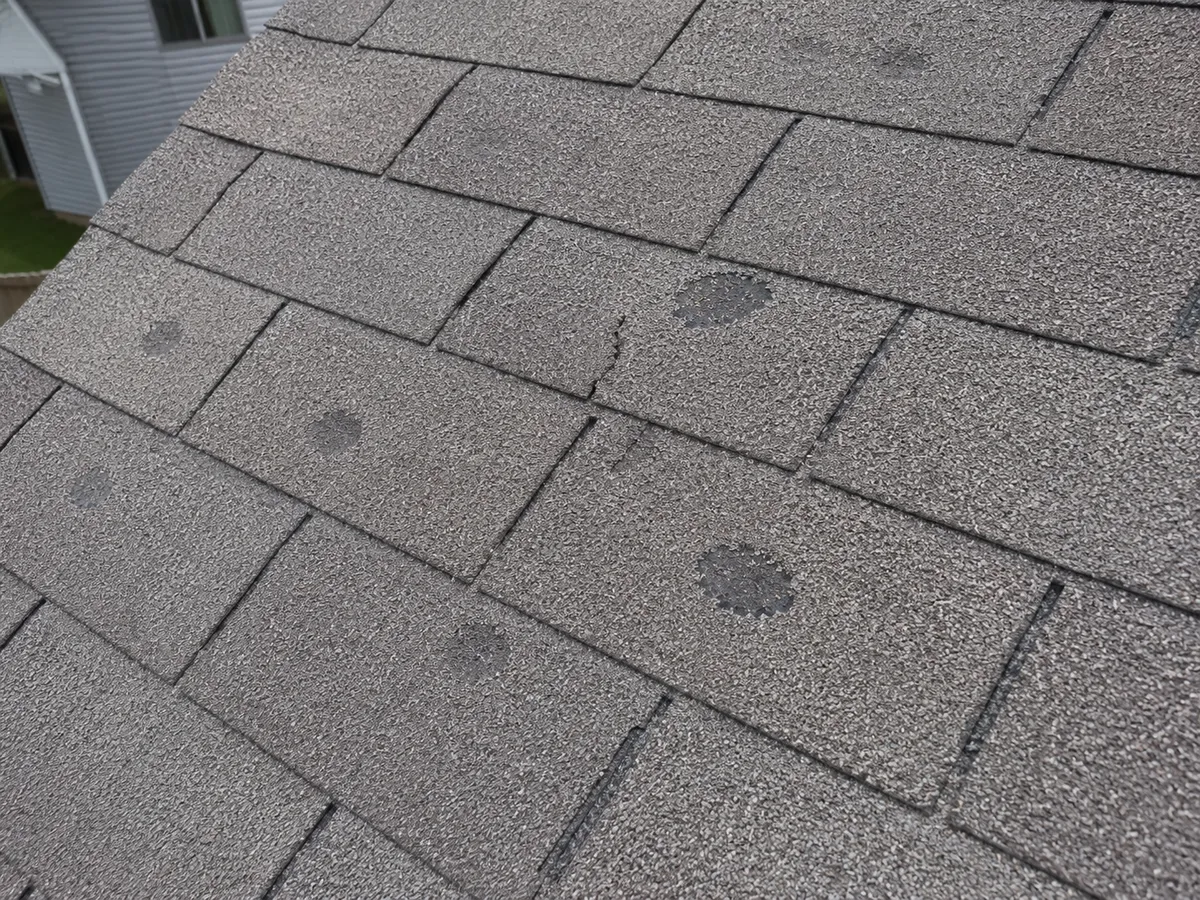
What Does Storm Damage to a Roof Actually Look Like?
Some storm damage is obvious. Some isn't.
A missing section of shingles is easy to spot from the ground. Hail damage can be much harder to see, even when the shingles have been affected.
What Does Hail Damage Look Like on a Roof?
Hail damage often isn't obvious from the ground. It usually shows up as:
- Bruising or dimpling on shingles
- Granule loss
- Areas where granule loss exposes the asphalt mat underneath
Both bruising and granule loss can shorten the shingle's remaining life even without an active leak yet. That is why looking up from the driveway is not always enough to determine whether a roof came through a hailstorm without damage.
What Does Wind Damage Look Like on a Roof?
Wind damage tends to be more visible. Common signs include:
- Lifted shingle tabs
- Torn shingle tabs
- Exposed nail heads
- Missing sections along the roof edges and ridge
The damage still needs to be assessed before deciding what repair is appropriate, but wind often leaves clearer visible signs than hail.
Should You Have Your Roof Inspected After a Hailstorm?
If you're concerned about storm damage, the first step is finding out what actually happened to the roof.
Hail damage can exist without an active leak and may not be visible from the ground. Wind can also lift or damage shingles without removing an entire section.
We assess the roof and document what we find so you have a record of the damage before moving forward with an insurance claim or repair. That documentation matters because the condition of the roof, not simply the fact that a storm occurred, is what needs to be evaluated.
How Long Do You Have to Act on a Storm Damage Claim?
There is a real clock running on a storm damage claim. Wisconsin gives you one year from the date of the loss to file suit over a property insurance claim (Wis. Stat. § 631.83).
Simply going back and forth with an adjuster doesn't pause that clock. Only a formal appraisal or arbitration process does. Your insurer also has to acknowledge your claim within 10 days of getting it, so if you've filed and heard nothing after that, it's worth following up.
The practical takeaway is straightforward. Get the damage documented and the claim filed soon after a storm, not months later once you finally get around to it.
What Happens When the Insurance Adjuster Inspects Your Roof?
We meet the adjuster on site when helpful and walk through the documented damage. We also provide the same photo record and scope of repair to both you and the insurer, so everyone is looking at the same documented conditions.
We work for you, not the insurance company. If an adjuster's initial scope misses something we found, we say so plainly and provide our documented findings.
What If the Insurance Estimate Doesn't Cover the Full Repair?
An insurer's initial estimate and the actual repair scope do not always match. If the insurance adjuster's estimate is lower than the actual repair cost, we can provide our own documented scope and cost breakdown to support a supplemental claim.
That does not change who makes the coverage decision. It gives you documentation showing what we found on the roof and what the repair actually requires.
How Should You Choose a Roofer After a Major Storm?
Be cautious about making a fast decision just because contractors suddenly start appearing in the neighborhood. After a major storm, it's common for out of state contractors to canvas neighborhoods door to door offering fast repairs.
Wisconsin insurance regulators specifically caution homeowners to verify:
- Local licensing
- A real local presence
The concern is practical. A contractor who's gone before winter can leave a warranty with no one to honor it. Take the time to confirm who you're hiring before signing anything.
Related reading: Does Homeowners Insurance Cover Roof Damage in Wisconsin?
Schedule Storm & Hail Damage Repair
Call our local team for a free consultation.
Storm & Hail Damage Repair Service Areas
Storm & Hail Damage Repair Questions, Answered
Will my insurance company automatically know I have hail damage?
No. You need to file a claim yourself. We can help document damage to support that claim, but the filing itself is between you and your insurer.
How long do I have to file a claim after a storm?
Wisconsin law gives you one year from the date of loss to file suit on a property insurance claim (Wis. Stat. § 631.83). It's worth filing the initial claim itself well before that deadline, not waiting until it's close.
Do I need multiple quotes before filing a claim?
Not to file the claim itself, though comparing quotes before choosing a contractor for the actual repair is always reasonable.
What if the insurance adjuster's estimate is lower than the actual repair cost?
This happens more often than homeowners expect. We can provide our own documented scope and cost breakdown to support a supplemental claim if the initial estimate doesn't cover the real damage.
Can I have hail damage even if my roof isn't leaking?
Yes. Hail damage often shows up as bruising or dimpling on shingles and granule loss that exposes the asphalt mat underneath. Both can shorten the shingle's remaining life even without an active leak yet.
What does wind damage look like on a roof?
Wind damage can show up as lifted or torn shingle tabs, exposed nail heads, and missing sections along the roof edges and ridge.
Can you meet my insurance adjuster at the property?
Yes. We meet the adjuster on site when helpful, walk through the documented damage, and provide the same photo record and scope of repair to both you and the insurer.