
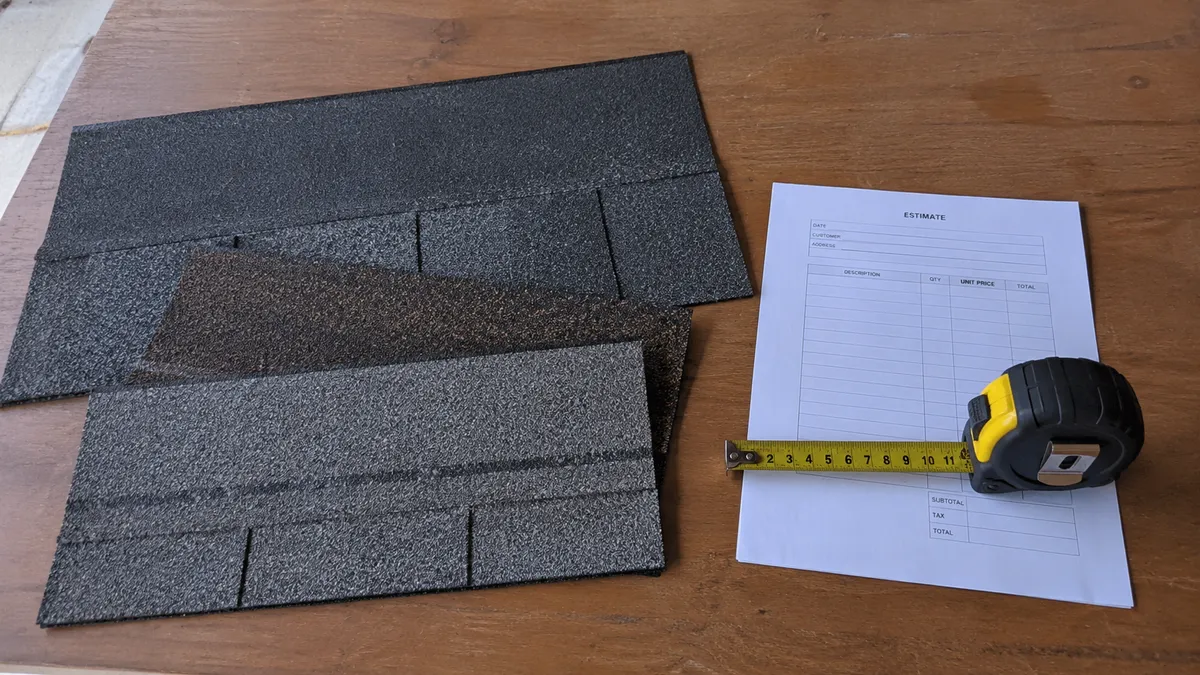
For most Milwaukee-area homeowners replacing a standard asphalt shingle roof, a realistic starting range is about $8,500 to $18,000. Metal roofing typically runs $22,000 to $37,500, while premium materials such as cedar and slate can push a project into the $25,000 to $60,000+ range.
That is a wide spread, and there is a reason. You are not buying shingles by the bundle and paying someone to nail them down. Roof size, pitch, number of roof sections, tear-off work, damaged decking, flashing, ventilation, underlayment, material choice, and even how easily the crew can access the house all affect the final number. A simple ranch in West Allis and a steep, multi-level home in Wauwatosa can have similar living space and very different roofing costs.
What Does a New Roof Cost in Wisconsin?
Here is a useful starting point for common residential roofing materials:
| Roofing Material | Typical Replacement Cost | Typical Lifespan |
|---|---|---|
| Asphalt shingles | $8,500 to $18,000 | 20 to 30 years |
| Metal roofing | $22,000 to $37,500 | 40 to 70 years |
| Cedar or other premium materials | $25,000 to $60,000+ | Cedar: 25 to 30 years |
| Slate | Often within or above the premium range | 75 to 100+ years |
For most homeowners in Milwaukee, Waukesha, and Ozaukee Counties, asphalt shingles are the most practical baseline. They cost considerably less than metal or slate, they work well for a wide range of Wisconsin homes, and replacement does not usually require the investment associated with premium roofing materials.
The range still leaves an obvious question: why does one asphalt roof cost $9,000 while another costs $17,000?
Usually, it comes down to the roof itself.
The 7 Biggest Factors That Determine Your Roof Replacement Cost
1. The Actual Size of the Roof
Roofing is priced based on roof area, not simply the square footage of the house.
A 1,500-square-foot house does not necessarily have a 1,500-square-foot roof. The roof extends beyond exterior walls, and its slope adds surface area.
A simple single-story ranch may have a relatively straightforward roof. A two-story home with several additions, dormers, attached garages, and multiple rooflines can have considerably more roofing material to remove and replace.
Roofers commonly calculate roofing material in squares, with one roofing square representing 100 square feet of roof surface.
The larger the actual roof, the more shingles, underlayment, flashing, labor, disposal capacity, and installation time the job requires.
2. Roof Pitch
A low, walkable roof is easier to work on than a steep roof.
As pitch increases, installation becomes slower and additional safety equipment may be necessary. Material handling also becomes more difficult.
That is why two roofs with roughly the same surface area can receive noticeably different estimates.
A basic ranch roof with two large slopes is one of the simpler roofs to replace. A steep Cape Cod or Tudor-style home with dormers and intersecting roof sections is a different job.
Milwaukee’s housing stock includes plenty of both.
3. Roof Complexity
Every time the roof changes direction, intersects another roof section, meets a wall, surrounds a chimney, or includes another penetration, there is additional work.
Valleys. These concentrate large amounts of rain and melting snow, so they need to be installed carefully.
Dormers. Each creates additional edges, flashing details, and roof-to-wall transitions.
Chimneys. Proper flashing around masonry is critical to keeping water out.
Skylights. These require their own flashing systems and additional installation work.
Multiple roof levels. Moving materials and workers between several elevations makes the job less efficient.
A big, simple roof can sometimes cost less to install per square foot than a smaller but highly complicated roof.
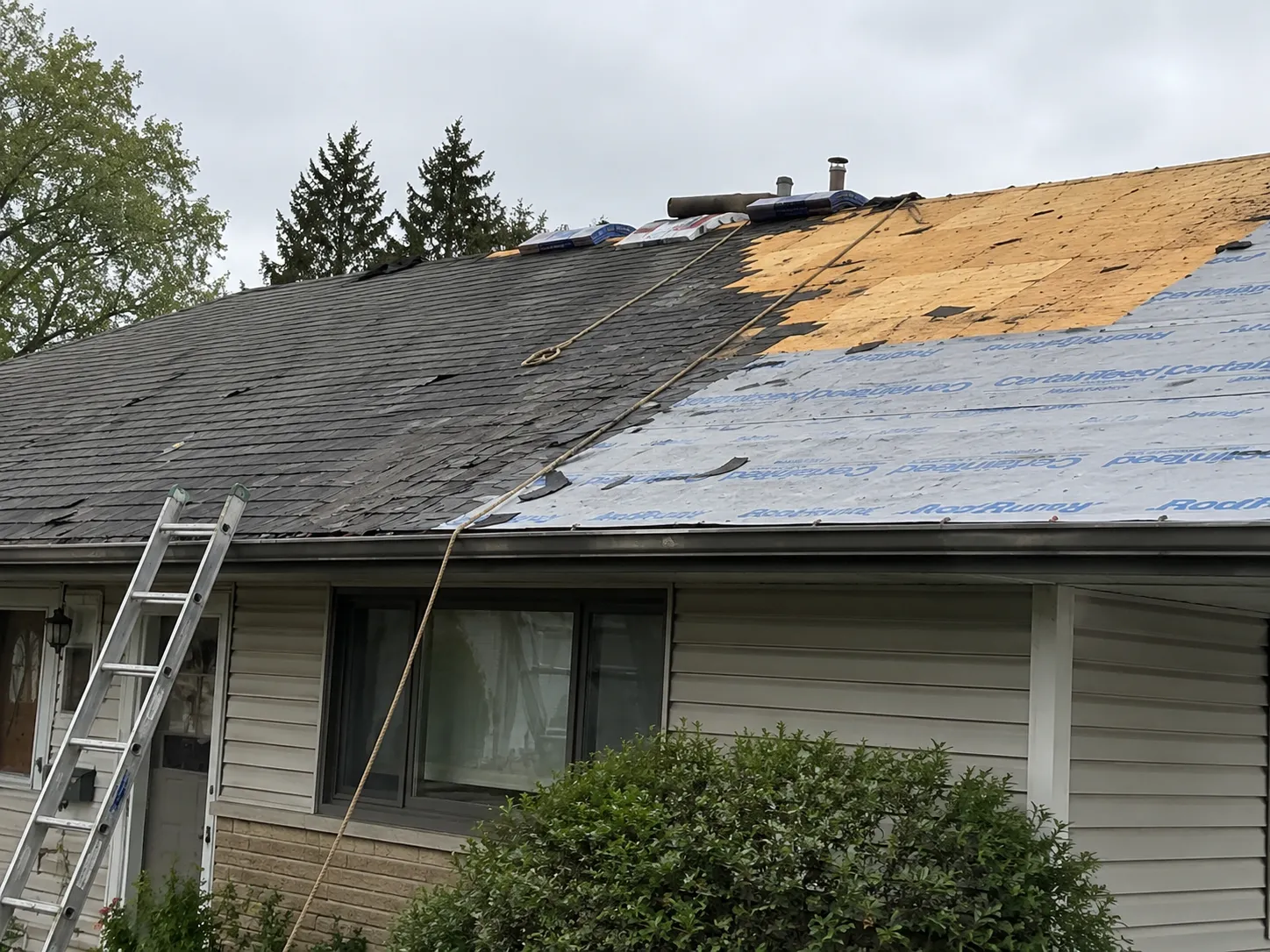 A completed tear-off and reroof on an asphalt shingle roof.
4. How Much Roofing Has to Be Torn Off
Most roof replacements involve removing the existing roofing before installing the new system.
That tear-off has a cost.
The crew has to remove the old shingles, move them safely off the roof, load the debris, transport it, and dispose of it.
If there are multiple existing roofing layers, the job becomes more labor intensive and produces significantly more material to dispose of.
Tearing the roof down to the deck also allows the contractor to see what has been happening underneath the shingles.
And that is where an estimate can sometimes change.
5. Damaged Roof Decking
You cannot always know the exact condition of the wood underneath a roof until the old material comes off.
If the sheathing is solid, the new roofing system can be installed over it.
If sections are soft, rotten, delaminated, or otherwise unsuitable, those areas need to be replaced before new shingles go down.
That is not an optional cosmetic upgrade. The roof covering needs a sound surface underneath it.
This is one reason a good estimate should explain how unexpected decking replacement is handled. You should know the price or pricing method before tear-off begins rather than discovering an undefined charge halfway through the job.
Water damage around valleys, chimneys, roof penetrations, and areas with a history of leaking are common places where hidden decking problems may appear.
6. The Roofing Material You Choose
Material selection is one of the easiest cost differences to see.
Asphalt shingles. Usually the most economical full-roof option for a typical Milwaukee-area home, at roughly $8,500 to $18,000.
Metal roofing. Significantly more expensive upfront at roughly $22,000 to $37,500, but with a typical service life of 40 to 70 years.
Cedar. A premium roofing material with a typical lifespan of about 25 to 30 years and substantially higher installation costs than ordinary asphalt.
Slate. Common on some of Milwaukee’s older homes, particularly on the East Side. Proper slate can last 75 to 100 years or more, but both replacement and specialized repair are expensive.
Do not compare an asphalt estimate with a metal estimate and conclude that one contractor is simply charging more. They are fundamentally different roofing systems.
7. Everything That Goes Under and Around the Shingles
Homeowners naturally focus on the visible roofing material, but a replacement includes much more.
A complete roofing system can involve underlayment, ice protection, starter materials, flashing, drip edges, ridge components, ventilation, pipe boots, and other details that keep water outside the house.
This is also an area where a suspiciously inexpensive estimate can hide differences.
Two contractors may both quote “architectural shingles,” but one scope may address failing flashing and ventilation while the other assumes existing components will remain.
The total prices are not truly comparable until you compare what each contractor is actually installing.
What Should Be Included in a Roof Replacement Estimate?
A roofing estimate should tell you enough to understand what you are paying for.
You should not have to compare two one-line numbers and guess why they are different.
Look for clarity around:
Tear-off. Is removal of the existing roof included?
Disposal. Is hauling and disposal of old roofing material included?
Roofing material. What specific type of roofing is being installed?
Underlayment. What is being installed between the roof deck and shingles?
Ice protection. Where will ice-and-water membrane be installed?
Flashing. Is existing flashing being reused, repaired, or replaced?
Ventilation. Is the existing attic ventilation adequate, or does the roofing work include changes?
Decking. How will damaged sheathing discovered during tear-off be priced?
Cleanup. Does the price include debris removal and final site cleanup?
Warranty. What workmanship and manufacturer coverage applies?
This matters more than simply asking each contractor for their “price per square.”
A lower estimate that omits necessary work is not necessarily less expensive. It may just move part of the cost into change orders or future repairs.
One More Wisconsin Factor: A Roof Here Has to Be Built for Winter
Wisconsin roofing has several cold-climate details that homeowners in warmer states do not have to think about as much.
Snow, ice, freeze-thaw cycles, and heat escaping from the house all affect how the roofing system performs.
Ice-and-Water Protection
Ice buildup can allow water to work beneath roofing materials near vulnerable roof edges.
Wisconsin building requirements call for ice-and-water-shield membrane on asphalt shingle roofs with a 4:12 slope or shallower over heated space, extending at least 30 inches up from the roof edge and 12 inches past the interior wall face (Wisconsin DSPS, SPS 321.28).
That membrane is not the part of your new roof you will admire from the driveway, but it can be one of the most important layers when winter conditions become difficult.
Attic Ventilation
Your new shingles sit on top of a roof system that also has to manage heat and moisture from inside the house.
Wisconsin building code calls for balanced soffit intake and ridge exhaust attic ventilation (Wisconsin DSPS, SPS 322.39).
If attic ventilation is inadequate, replacing shingles alone may not address the conditions underneath the old roof.
Attic Insulation
Milwaukee is in Climate Zone 6, where the Wisconsin Energy Code calls for minimum R-49 attic insulation.
Insulation is not normally what homeowners picture when budgeting for shingles, but roof replacement is a logical time to identify obvious attic problems because the roof and attic affect one another.
If one contractor’s estimate includes correcting ventilation problems while another simply covers the existing roof system with new materials, those estimates are not necessarily describing the same project.
Is Repair Cheaper Than Replacing the Roof?
Yes, when the problem is actually repairable.
A full roof replacement should not automatically be the answer every time water gets into the house.
Typical smaller repair costs can look very different:
- Asphalt shingle patch: about $250 on average
- Flashing repair: roughly $10 to $20 per linear foot
- Slate repair: $500 or more
If a roof has one damaged area and otherwise has substantial useful life remaining, spending hundreds on roof repair can make considerably more sense than spending thousands on replacement.
The calculation changes when the roof is nearing the end of its life.
Suppose you have a 24-year-old asphalt roof and one leak appears around a valley. Fixing that particular problem may still be completely reasonable.
But if you repair the valley this year, replace deteriorated flashing next year, patch another leak six months later, and the shingles across the roof are already wearing out, continued repairs eventually stop being the economical choice.
The question is not whether repairing today is cheaper than replacing today. It obviously is.
The better question is whether you are repairing an isolated problem or continually putting money into a roof that is nearing the end of its useful life.
Can Homeowners Insurance Pay for a New Roof?
Sometimes, but only when the reason for replacement is a covered loss.
Insurance is not intended to replace a roof simply because it has reached the end of its normal service life.
If wind, hail, a fallen tree, fire, or another covered event damages the roof, your homeowners policy may cover eligible repairs or replacement according to your policy terms, deductible, and loss-settlement provisions.
If a 25-year-old roof is simply worn out, that is normally a homeowner expense.
That distinction matters after major Milwaukee storms because roofing salespeople sometimes present insurance replacement as though every old roof with hail marks automatically becomes a free new roof.
It does not work that way.
If you suspect storm damage, document it promptly and have the condition evaluated. For more detail, see what homeowners insurance covers for roof damage in Wisconsin.
How to Compare Roofing Quotes Without Just Choosing the Cheapest
Getting multiple estimates is reasonable.
Choosing whichever number is lowest without comparing the scope is not.
If one contractor quotes $11,000 and another quotes $14,000, ask why.
Maybe the expensive contractor is overpriced.
Or maybe one estimate includes removal of two roofing layers, replacement flashing, new ventilation components, ice protection, disposal, and a detailed workmanship warranty while the other does not.
Compare the same categories across every bid:
- Roofing material
- Tear-off scope
- Underlayment and ice protection
- Flashing work
- Ventilation
- Decking replacement terms
- Cleanup and disposal
- Workmanship warranty
- Manufacturer warranty
- Contractor credentials
Wisconsin contractors obtaining building permits for one- and two-family dwelling work must hold a Dwelling Contractor credential and hold or employ someone with a Dwelling Contractor Qualifier credential (Wisconsin DSPS, SPS 305.31).
That credential check is especially important after large hail or wind events, when out-of-state storm contractors may move quickly into affected neighborhoods.
The Cheapest Roof Is Not Necessarily the Lowest-Cost Roof
If an asphalt roof costs $8,500 to $18,000, there is enough money involved that nobody wants to overpay.
But cutting the price by removing the things that make the roof perform correctly is not really saving money.
A roof that leaks around poorly handled flashing, traps attic moisture because ventilation was ignored, or requires repeated repairs a few years after installation was not inexpensive. It was just inexpensive on installation day.
At the same time, spending more does not automatically mean you are getting a better roof.
The useful comparison is scope, materials, workmanship, and price together.
For most Milwaukee-area homeowners, a standard asphalt replacement will fall somewhere within the $8,500 to $18,000 range. A larger, steeper, or more complicated roof can move toward the top of that range or beyond it. Premium materials can move the project far higher.
The only way to turn that range into a meaningful number for your house is to look at the actual roof.
What Should You Budget for a New Roof in Milwaukee?
If you are starting to plan rather than responding to an active leak, use the material ranges as your first budgeting number:
Asphalt: $8,500 to $18,000
Metal: $22,000 to $37,500
Premium materials such as cedar or slate: $25,000 to $60,000+
Then look at the house itself.
A straightforward asphalt roof with easy access and a sound deck belongs closer to one end of the spectrum. A steep, complicated roof with extensive flashing, multiple levels, damaged decking, or specialized materials belongs closer to the other.
The estimate should answer why your house falls where it does.
That is much more useful than an online calculator giving you a single number based only on square footage.
Milwaukee Roof Contractors provides roof inspection, roof repair, and roof replacement throughout Milwaukee, Waukesha, and Ozaukee Counties, including Wauwatosa, West Allis, Mequon, Whitefish Bay, Glendale, Shorewood, Menomonee Falls, Cedarburg, Grafton, Brookfield, New Berlin, and surrounding communities. If you’re planning a new roof and want to know what your specific home would cost, contact us for an evaluation and replacement estimate.