
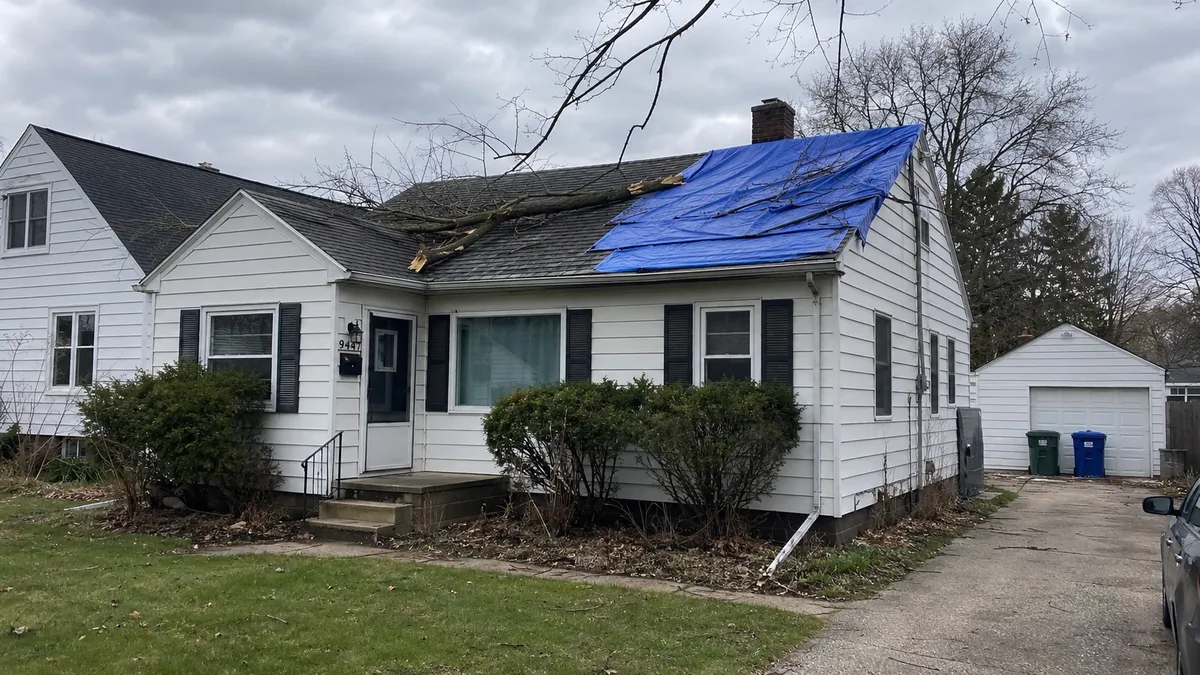
A severe Milwaukee storm moves through, you hear hail hitting the windows or a branch come down, and afterward you find shingles in the yard or water dripping from the ceiling. At that point, the order in which you handle the next few steps matters. Your first job is not getting a replacement estimate. It is keeping everyone safe, preventing additional damage, and documenting what happened before the evidence disappears.
Wisconsin’s Office of the Commissioner of Insurance reiterated that advice after severe storms brought high winds, tornadoes, hail, and significant property damage to eastern Wisconsin in July 2026. Homeowners were advised to photograph damage, keep records, and notify their insurer promptly. The same basic process applies whether you have a few missing shingles or a tree sitting across the roof.
The 7 Things to Do After Roof Storm Damage
1. Make Sure the House Is Safe First
Before you start thinking about shingles, insurance, or contractors, look for conditions that make the property unsafe.
Do not climb onto the roof to inspect storm damage yourself.
Stay away from:
- Downed electrical lines
- Broken or leaning tree limbs
- Sagging ceilings
- Areas where the roof structure appears to have shifted
- Standing water around electrical fixtures
- Broken glass or storm debris
- Any area where a tree has significantly damaged the structure
If there are downed power lines, a suspected gas leak, major structural damage, or another immediate hazard, leave the affected area and follow instructions from emergency services or local authorities.
The National Association of Insurance Commissioners recommends checking for hazards such as downed electrical lines and damaged gas lines before inspecting storm-damaged property. If significant structural damage is suspected, Wisconsin’s Office of the Commissioner of Insurance also advises discussing professional structural and electrical inspection with your adjuster.
A roof can be repaired later. Your first priority is making sure nobody gets hurt trying to assess the damage.
2. Document Everything Before Cleanup Starts
Once it is safe, take pictures.
You do not need professional-quality photographs. You need a record of what the property looked like immediately after the storm.
Photograph:
- Missing shingles
- Shingles or roofing material in the yard
- Fallen branches
- Damaged gutters and downspouts
- Dents or hail damage on exterior surfaces
- Water stains
- Ceiling damage
- Wet floors
- Damaged insulation you can safely see
- Damaged siding, windows, vents, or exterior trim
- Any personal property damaged by incoming water
Take some wider photographs that show where the damage is located, then closer photographs showing the condition itself.
Do this before debris is removed whenever reasonably possible.
Wisconsin’s Office of the Commissioner of Insurance specifically tells homeowners to photograph storm damage before cleanup, make a list of damaged property, and avoid throwing away damaged items before the claim adjuster has agreed, unless safety or local officials require disposal.
If you find shingles in your yard, do not worry about determining whether each one came from your roof. Photograph where you found them and keep them if practical.
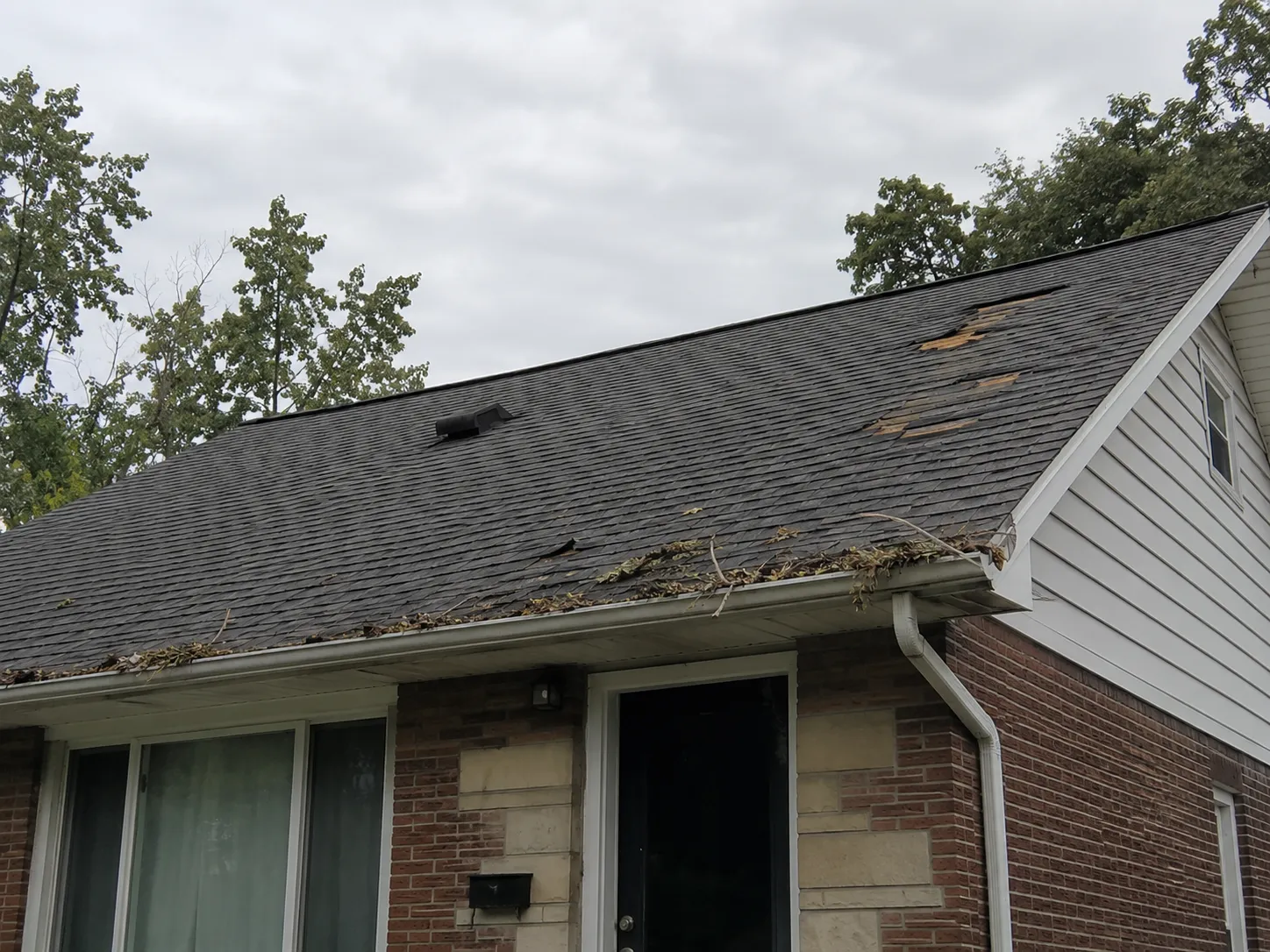 Photographing missing shingles, gutters, and other damage before cleanup protects the claim either way.
3. Stop More Water From Getting Into the House
Once the original damage has been documented, the next priority is preventing a damaged roof from creating a second round of damage.
A missing section of shingles may start as a roofing problem.
Another two inches of rain can turn it into wet insulation, damaged drywall, ruined flooring, damaged furniture, and water throughout the house.
Temporary protection might include professionally securing a tarp over an exposed section of roof or covering another storm-created opening until permanent work can be completed.
The National Association of Insurance Commissioners advises homeowners to take reasonable steps after documenting a loss to prevent further damage, including temporary measures such as covering roof openings. Keep receipts for temporary repairs because those costs may be part of a covered claim depending on your policy.
Do not climb onto a damaged, wet, or steep roof to install a tarp yourself. Storm-damaged roofing can be unstable, and surfaces that look secure from the ground may not be.
If water is actively entering the house or a storm has left part of the roof exposed, that is the time for emergency roof repair.
4. Notify Your Insurance Company Promptly
If the storm damage appears substantial enough that insurance may be involved, contact your insurance company or agent.
You do not need to know the complete repair cost before making the initial report.
Tell them:
- When the storm occurred
- What damage you have observed
- Whether water is actively entering
- Whether emergency temporary repairs are necessary
- How they want photographs, estimates, and other documentation submitted
The Wisconsin Office of the Commissioner of Insurance advises homeowners to contact their insurance agent or company right away after storm damage to begin the claims process.
Write down your claim number and keep it somewhere easy to find.
From this point forward, create one folder for everything related to the storm. Save emails, photographs, estimates, receipts, insurance documents, and notes from conversations.
You will be glad you did if questions come up later.
5. Get the Roof Professionally Inspected
Some storm damage is obvious.
If a tree punches through the roof, you do not need a roofing expert to tell you something happened.
Hail and wind damage can be less obvious.
Wind can lift or loosen shingles without removing them completely. Hail can damage the shingle surface while the roof still looks fairly normal from the driveway. Flashing, ridge caps, vents, gutters, and other roofing components can also be affected.
A roofing inspection should establish what is actually damaged and what work appears necessary.
That does not mean a roofer decides what your insurance company owes.
The contractor’s job is to evaluate the roof and document the roofing work. The insurance company determines coverage according to your policy.
That distinction becomes important when someone tells you they can guarantee that insurance will buy you a completely new roof.
Nobody inspecting your shingles can guarantee how an insurer will adjust a claim.
6. Keep Receipts and Do Not Rush Into Permanent Repairs
Emergency work and permanent work are different.
If there is an opening in the roof, deal with the immediate problem.
But do not rush from “I found storm damage” to “tear the entire roof off tomorrow” without documenting the condition and understanding the claim process.
Keep receipts for:
- Emergency tarping
- Temporary roof repairs
- Water mitigation
- Materials purchased to protect the property
- Other storm-related emergency work
Wisconsin OCI specifically advises homeowners to keep receipts documenting repair and replacement costs. The National Association of Insurance Commissioners similarly recommends documenting damage first, performing necessary temporary mitigation, and communicating with the insurer before moving ahead with permanent repairs that could affect the claim.
This does not mean you should leave an actively leaking roof open while waiting for an adjuster.
It means protect the property first, preserve the evidence, then coordinate the permanent repair.
7. Be Careful Who You Sign With After the Storm
Large hail and wind events create an immediate spike in demand for roofing work.
They also attract contractors from outside the area who follow storms from one market to another.
Some may be legitimate roofing businesses. Others may be difficult to reach once the storm season moves elsewhere.
Do not let someone pressure you into signing a roofing contract on your doorstep because they claim you need to act before your insurance opportunity disappears.
Ask:
- Where is the company actually based?
- How long will they be operating locally?
- Who performs the work?
- Are they properly credentialed?
- What exactly are you agreeing to?
- Is there a written scope of work?
- What warranty are they providing?
- What happens if the insurance scope and contractor’s proposal differ?
Wisconsin law prohibits contractors from promising to pay or rebate your insurance deductible as an incentive to sign, and from negotiating or representing you on an insurance claim (Wis. Stat. § 100.65). With your permission, a contractor can discuss the physical damage and repair costs with the insurer, but that is different from acting as your insurance representative.
For one- and two-family dwelling work requiring a building permit, Wisconsin DSPS requires the person obtaining the permit to hold a Dwelling Contractor credential and hold or employ someone with a Dwelling Contractor Qualifier credential (Wisconsin DSPS, SPS 305.31).
The hours after a storm are a bad time to sign something you do not fully understand.
What Roof Damage Is Actually an Emergency?
Storm damage ranges from cosmetic marks to a roof that cannot keep rain outside.
Call Immediately
- A tree or large limb has struck the roof
- Water is actively entering the house
- A large section of shingles has blown away
- Roof decking is visibly exposed
- Part of the roof appears structurally damaged
- A ceiling is sagging or filling with water
- Water is entering around electrical fixtures
- Another storm is approaching and the roof is open
The objective is temporary stabilization and preventing additional damage.
Usually Safe to Schedule Promptly
- A few shingles appear to be missing
- You find shingles in the yard but see no active leak
- Gutters or downspouts were damaged
- You suspect hail damage but nothing is leaking
- A small branch struck the roof without obvious penetration
- Neighbors have storm damage and you want your roof checked
These situations still deserve attention, but they generally do not require the same immediate response as water pouring through a ceiling.
A storm inspection can determine whether you are dealing with superficial damage, a straightforward repair, or something more significant.
One More Wisconsin Factor: Do Not Forget the Insurance Deadline
There is another reason Wisconsin homeowners should not put storm damage in the “I’ll deal with it eventually” category.
Wisconsin law establishes a 12-month statutory limitation period for bringing legal action on many property insurance losses, including windstorm and hail losses (Wis. Stat. § 631.83).
The statute also provides that the limitation period is paused while the parties conduct a formal appraisal or arbitration process.
Some insurance policies may provide a longer period, so your actual policy language matters. But you should not assume that simply continuing to talk with an insurer indefinitely protects your legal rights. Wisconsin courts have applied the statutory limitation to storm and hail claims, while also recognizing that a policy may extend the deadline.
For a homeowner, the practical takeaway is simple:
Report the damage promptly. Document it promptly. Deal with disagreements promptly.
You do not need to turn an ordinary roof claim into a legal issue. You just do not want to discover months later that a deadline mattered and you ignored it.
For a deeper explanation of coverage, deductibles, depreciation, and partial roof replacement, see what homeowners insurance covers for roof damage in Wisconsin.
What Not to Do After Roof Storm Damage
Some mistakes can make an already stressful situation harder.
Do not climb onto the roof yourself. You can document plenty from the ground and inside the attic without taking an unnecessary fall risk.
Do not throw everything away immediately. Photograph damage first and preserve damaged materials when reasonable.
Do not ignore an active opening because the adjuster has not arrived. Temporary mitigation exists specifically to prevent additional damage.
Do not authorize major permanent work without understanding what you signed. Emergency protection is different from committing to a complete replacement.
Do not let a roofer promise insurance coverage. A contractor can document roofing damage and estimate repairs. Your insurer determines coverage.
Do not hide old damage or exaggerate new damage. A storm inspection should document what is actually present.
Do not wait months to start the process. Storm dates matter, documentation gets harder with time, and Wisconsin has a statutory limitation period for property insurance actions.
The First Goal Is to Keep a Roof Problem From Becoming a House Problem
After storm damage, you do not need to figure out the entire roofing and insurance process in the first hour.
You need to do the first things correctly.
Make sure everyone is safe.
Document what happened.
Keep more water from getting inside.
Notify the insurer if the loss may involve coverage.
Have the roof inspected.
Keep your paperwork.
Then decide what permanent repair is actually necessary.
A handful of missing shingles after a Milwaukee thunderstorm may ultimately require a fairly simple repair. Severe hail may have affected large portions of the roofing system. A falling tree may require immediate temporary protection followed by structural and roofing work.
You cannot know the final scope from the driveway.
What you can control is how quickly you protect the house and how well you document the condition before anything changes.
If wind, hail, or falling debris has damaged your roof, Milwaukee Roof Contractors provides roof inspection, roof repair, emergency roof repair, roof replacement, and storm and hail damage repair throughout Milwaukee, Waukesha, and Ozaukee Counties, including Wauwatosa, West Allis, Mequon, Whitefish Bay, Glendale, Shorewood, Menomonee Falls, Cedarburg, Grafton, Brookfield, New Berlin, and surrounding communities. If your roof is actively leaking or exposed after a storm, contact us to get the damage evaluated and the home protected.